
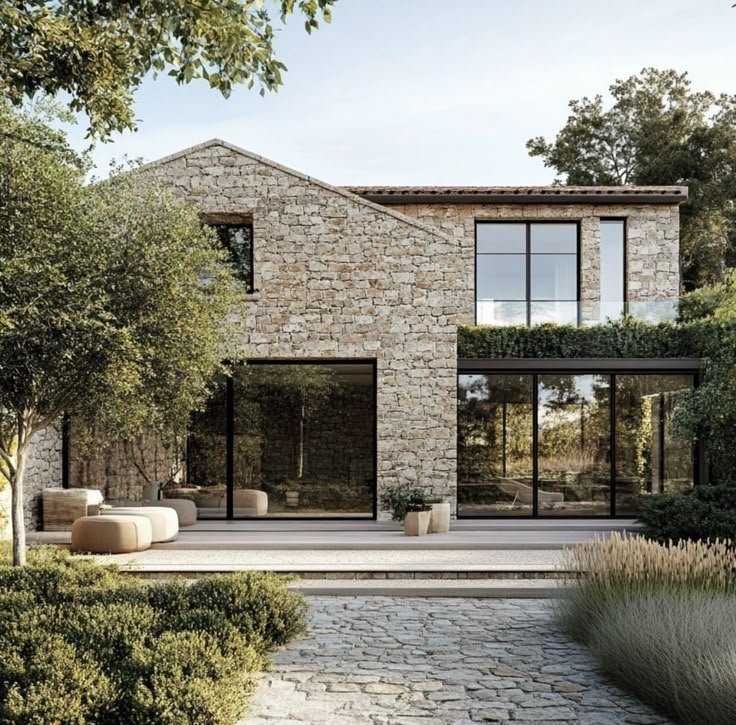
A house is advertised at 300 m². The cadastre records 275 m². The energy certificate measures 175 m². The architect’s floor plan, measured to international standard, returns 240 m².
None of those figures is a lie. All four are official. They simply measure different things, for different purposes, and a buyer who does not know which is which can sign for a house that is materially smaller, and worth materially less, than the one they believed they were buying.
This happens constantly in Spain, and almost never because anyone set out to mislead. It happens because four institutions measure property in four different ways, and the advertised figure is usually the most generous of them.
Here is how to read each one, and then the question that matters more than any of them.
1. The Land Registry: what you legally acquire
The nota simple from the Registro de la Propiedad is the only document that tells you what you are legally buying. It describes the property as it was last declared, names the owner, and lists the charges: mortgages, easements, tax liens.
Its surface figure is the superficie registral, and it is often the smallest of the four, because it reflects only what has been formally declared. If a previous owner enclosed a terrace, converted a basement or added a floor and never declared it, the registry still describes the original, smaller house.
If the agent’s copy is recent, it is perfectly good to work from. If it is not, ask them for a current one, request it yourself from the Registro de la Propiedad (it costs around nine euros online) or have your lawyer pull it. What you should not do is make an offer on a description nobody has verified this year.
Everything else is context. This is the number a notary, a bank and a judge will work from.
2. The cadastre: what physically exists, and for what use
The catastro is a tax record, not a proof of ownership, but it is the most descriptive of the four. It reports the total superficie construida and, crucially, breaks it down by use.
This is where most surprises appear. A typical hillside house on this coast might show:
The house is advertised as 300 m². But only 190 m² is registered as dwelling. The 85 m² basement (which may well contain a bedroom, a bathroom and a living area in practice) is officially a storeroom.
That distinction is not cosmetic. It changes what a bank will lend, what a surveyor will value, and what you can legally do with the space.
Check also that the cadastral reference on the nota simple and on the cadastre match exactly. If they differ, stop and ask why.
3. The energy certificate: the conditioned area only
The certificado de eficiencia energética is mandatory in every advertisement, and it carries a surface figure that many buyers ignore.
The technician who issues it measures only the habitable, climate-conditioned area. Garages, storerooms, porches and unconverted basements are excluded. If the certificate says 175 m² and the advert says 300 m², that gap is telling you something specific: roughly 125 m² of the house is not considered habitable space.
Used well, the certificate is a free, independent check on the dwelling area, and it takes ten seconds to read.
4. The floor plan: what is actually there
A measured floor plan, increasingly produced to the RICS international standard by the photographers who shoot listings, gives you the real internal area, usually excluding terraces and balconies, which are listed separately.
It is the only figure produced by someone who physically walked the house with a laser. It settles arguments.
Why the four never agree
Built versus usable. Superficie construida includes the thickness of the walls and, in a block of flats, a share of the common areas. Superficie útil is the floor you can actually stand on. Usable area is typically 75–85% of built area, so the same house is honestly describable with two figures that differ by fifty square metres.
Undeclared works. Spain’s coastline is full of houses extended over decades without declaration. The extension exists, is used, pays rubbish collection, and is invisible to the registry.
Change of use never requested. A basement built as a garage or store can be lived in for thirty years without ever being reclassified as dwelling. Physically it is a home; legally it is a storeroom.
Advertising practice. In the absence of a rule, agents tend to quote the largest defensible figure. It is not usually fraud. It is not usually checked either.
The question that matters most: when were the extra metres built?
Suppose the registry describes 70 m² and the house you walked through is plainly 200 m². The gap itself is not the decisive fact. The decisive fact is when those metres appeared.
Spanish planning law gives the town hall a limited window to act against works built without licence. Once that period has passed, the council can no longer order demolition, and the works can usually be inscribed in the registry through a declaración de obra nueva antigua, supported by a technician’s certificate of age and a cadastral certification.
Buyers hear “we can declare it” and relax. That is the moment to slow down, because of what comes next.
Declaring is not legalising
A declaración de obra nueva puts the extra metres on the record. It does not grant them a licence they never had. They are accepted, they appear in the registry, and from then on you pay annual property tax on them.
What they do not become is normal, licensed built space. In most cases they remain in a restricted planning situation where only conservation and maintenance are permitted: not substantial renovation, not extension.
The trap that catches renovators
Here is where buyers get hurt. You buy a house intending to renovate. You apply for the licence. And the council will only grant a licence for space that officially exists.
In some cases the declaración de obra nueva is enough to unlock the application. In others it is not, and you are left holding rooms you cannot legally touch. The answer is not the same in every municipality, on every plot, or under every planning classification, and it is a question for a local architect and a lawyer before the deposit, not after.
There is a further risk that people rarely anticipate. If the council inspects while the works are under way and finds that something in those added metres does not match what was declared in the declaración de obra nueva (minimum distances to neighbouring plots are the classic example), the licence can be refused or withdrawn, the works can be halted, and in the worst case demolition can be ordered, with the renovation half finished and the money spent.
None of this makes such a house unbuyable. It makes it a house that must be priced, negotiated and planned with the situation fully understood.
Rustic property is a longer conversation
Everything above applies with more force to fincas rústicas, and two additional issues arrive with them.
Almost all of them carry undeclared square metres. Barns converted to living space, annexes, pool houses, stables turned into guest accommodation, built across generations, rarely declared. Expect it, and budget the technical survey to establish what exists and when it was built.
And the limitation period may never apply. On protected rural land, planning enforcement generally does not expire the way it does in an urban plot. Works that would be time-barred in town can remain actionable indefinitely in the countryside. Never assume that age alone settles the question on rustic land.
Restoring a masia is not always the town hall’s decision
In Catalonia, whether an old rural building can be restored at all depends on something most buyers have never heard of: the municipality’s catàleg de masies i cases rurals, the inventory of rural buildings eligible for restoration.
A masia included in the catalogue can be restored for the uses the catalogue assigns to it: dwelling, rural tourism, hospitality, educational or artisan activity. A masia that is not in it may simply not be restorable for those uses, however beautiful the building and however willing the buyer.
And the approval route depends on the level of protection the catalogue assigns. For some buildings the town hall decides; for others the application goes to the Comissió Territorial d’Urbanisme (Barcelona or Girona, depending on where the property sits), and that process runs to six months or more before a municipal licence is even on the table.
That timeline is a commercial fact, not a technicality. It is longer than the usual window between arras and completion, which means you will normally be asked to buy before you know the answer. So the question comes first, not last: is this building catalogued, at what level, for which uses, and has anyone already begun the process?
And then there is the land
Country estates frequently carry public paths and rights of way: municipal tracks, old droving routes, footpaths used by neighbours for decades. A right of way used openly and continuously over many years can become a legally acquired easement, and the owner cannot simply close it.
Buyers fall in love with the privacy of a finca and discover afterwards that a path crosses it that they have no right to block. Before you buy rural land, have someone check the municipal inventory of public paths and the registry entry for easements, and walk the boundary asking who else uses it.
What it costs you if you do not check
Your mortgage. A valuer working to Spanish valuation standards counts legally recognised surface, and values a storeroom at a fraction of the price per square metre of a dwelling. A house advertised at 300 m² but registered with 190 m² of dwelling can be valued far below the agreed price, and the bank lends on the valuation, not on the price. That gap comes out of your pocket, at the worst possible moment.
Your tax bill. Since 2022, transfer tax is calculated on the cadastral valor de referencia when that value exceeds the price paid. And once extra metres are declared, they add to your annual property tax for as long as you own the house.
Your resale. Every problem you accept, you inherit. The next buyer’s lawyer will find exactly what yours should have found.
Your plans. If you intend to convert that basement into bedrooms, you need a change-of-use licence, granted only if the space meets habitability requirements: minimum ceiling height, ventilation, natural light. In a low basement, that can be impossible. Buy the potential, verify it first.
The checklist, before you sign anything
- Get a current nota simple: a recent copy from the agent, or request your own from the Registro de la Propiedad, or through your lawyer.
- Pull the cadastral record and read the breakdown by use, not just the total.
- Read the surface on the energy certificate and compare it with the advertised figure.
- Ask for a measured floor plan. Any serious listing has one.
- Line up the four figures side by side. If they agree, proceed. If they do not, every difference must be explained before you commit.
- Where there is a gap, establish the age of the works with a technician’s certificate, then ask the question that follows: can a renovation licence be obtained for this space, in this municipality, on this plot?
- In Catalonia, ask for the cédula de habitabilidad. It is required to complete a sale, and a property that cannot obtain one has a problem you need to understand.
- On rustic land, add three more: whether the building appears in the catàleg de masies i cases rurals and at what level; the municipal inventory of public paths; and the easements recorded on the nota simple.
Take note
None of this makes a house a bad buy. Some of the finest properties on this coast carry a decades-old undeclared basement, and they are still worth buying, at the right price, with the situation understood and priced in.
Every property and every municipality is its own case. What is resolved on one plot is refused on the next street. The damage is never done by the discrepancy itself; it is done by finding out about it at the notary, or halfway through a renovation.
If you are weighing a purchase and the numbers on the documents do not line up, that is a conversation we have most weeks. Have a look at the guide to the cost of buying property in Spain, or the one on the arras contract for what happens once you commit.
Ronei Kolesny
Correct at August 2026. This article is general information about Spanish and Catalan property practice, not legal or technical advice, and rules differ between municipalities and between land classifications. Limitation periods, catalogue levels and licensing routes must be confirmed for the specific property. We always recommend appointing an independent lawyer and a local architect, and we can introduce both.