
Barleigh Ellis Editorial · 6 June 2026 · 9 min read
Long before the August crowds and the booked-out terraces, the season turns on a single night of fire by the sea. For anyone who lives here rather than visits, the week of 18 to 24 June is when the coast announces itself: first the electronic pulse of Sónar, then the bonfires of the Revetlla de Sant Joan.
This is a guide to both, and to why they matter more when you have a terrace, a stretch of beach, or a quiet inland garden of your own to enjoy them from.
I
Sónar 2026
Three Days That Set the Tone
Sónar draws designers, founders and an international crowd who treat Barcelona as a base rather than a stopover
Sónar returns for its 33rd edition from 18 to 20 June 2026 at Fira Gran Via in L’Hospitalet de Llobregat. This year brings the biggest structural change in the festival’s history: for the first time, Sónar by Day and Sónar by Night are unified under one roof, in a single venue with uninterrupted music from afternoon into the early hours.
The format is built around six stages: three open-air, three indoor. You can spend the afternoon on the grass at SonarVillage by Estrella Damm and the night inside SonarClub, billed this year as “the world’s largest dancefloor”. Thursday opens with four stages and closes at 03:00; Friday and Saturday run all six, through to 07:00. The line-up gathers more than 100 acts, among them Charlotte de Witte, Amelie Lens, Skepta, Kelis, Modeselektor and Nia Archives.
Alongside the music, Sónar+D, the festival’s ideas and technology strand, moves to the Llotja de Mar on 18 and 19 June, from 10:00 to 21:00, organised around three themes: AI and music, “Beyond the Screen”, and the future of the internet.
Sónar Barcelona 2026
Day and night unified for the first time across six stages, three open-air and three indoor. Over 100 acts including Charlotte de Witte, Amelie Lens, Skepta, Kelis, Modeselektor and Nia Archives. Sónar+D runs in parallel at the Llotja de Mar on 18 and 19 June.
Learn More →II
The Revetlla de Sant Joan
The Night Catalonia Welcomes Summer with Fire
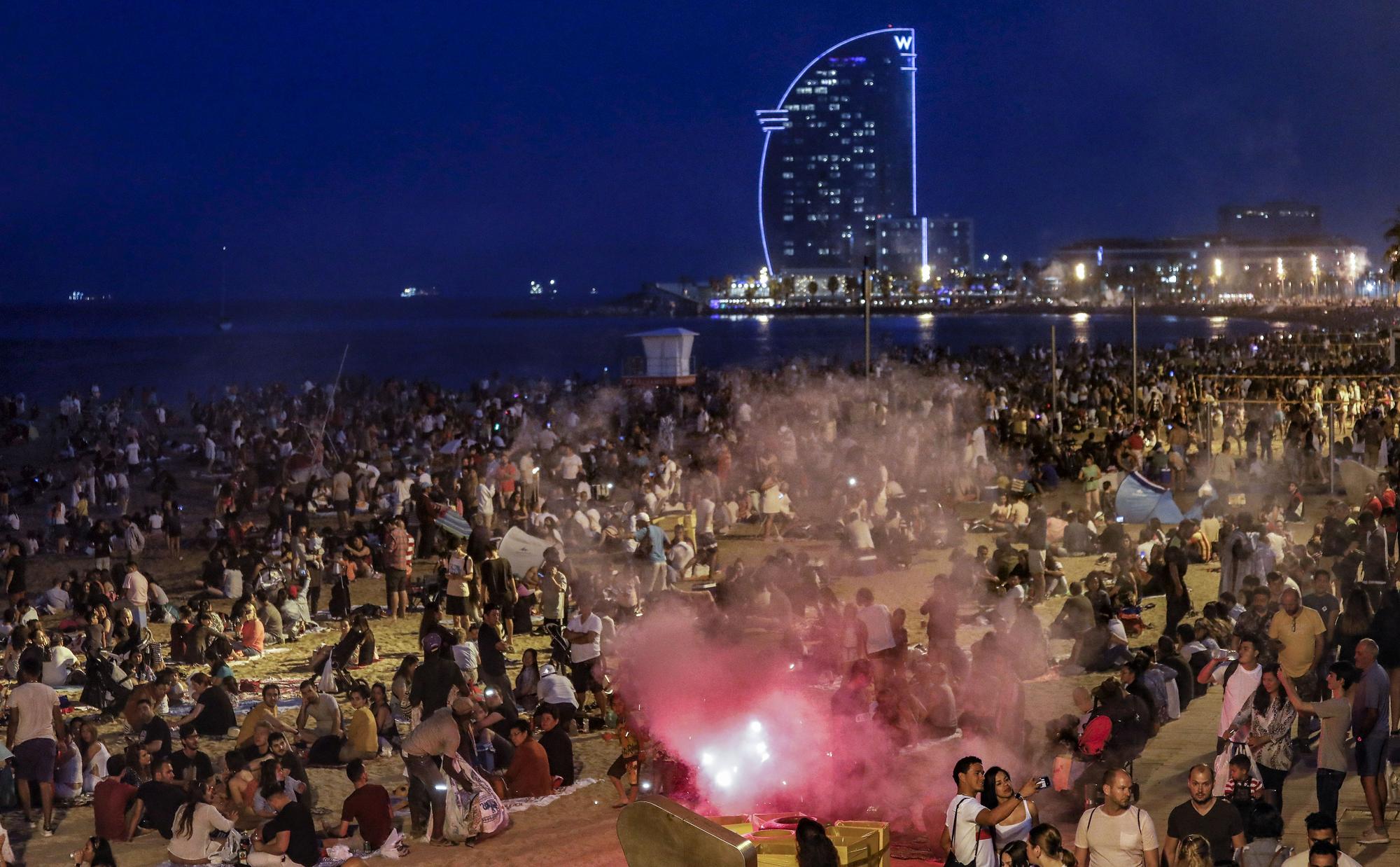
On the night of 23 June, the coves and beaches of the Catalan coast become small theatres of fire until first light
If Sónar is the city’s overture, the Revetlla de Sant Joan on the night of 23 June is the real thing. Catalans call it the Nit de Foc, the Night of Fire, and it falls around the summer solstice: symbolically the shortest, brightest night of the year. It is, without much competition, the most loved night on the Catalan calendar.
Three elements give the festival its shape. Fire, which purifies and is said to drive off the spirits abroad on this one night. Water, which heals; hence the tradition of the midnight swim, when the sea is believed to cleanse whoever enters it. And medicinal herbs, whose powers are held to be at their strongest before dawn on 24 June. You do not have to believe any of it to feel the pull of a beach lit by bonfires at two in the morning.
III
The Flama del Canigó
One Flame, from the Mountains, to the Sea
The fire itself has a lineage. Since 1966, the Flama del Canigó has been carried down from the summit of Mont Canigó in the Pyrenees and distributed across the Catalan-speaking lands to light the Sant Joan bonfires. The flame is kept burning all year in the Castle Tower at Perpignan and renewed each 23 June at the mountain’s peak.
On the afternoon of the 23rd it reaches Plaça de Sant Jaume in Barcelona, received by the city’s authorities alongside the Eagle and the Giants to the strains of Muntanyes del Canigó. It is less a piece of folklore than a living symbol of Catalan identity: a single flame, from the mountains, lighting the fire on the seafront.
IV
Coca, Cava & the Long Table
How the Night Is Really Spent
No revetlla happens without a coca de Sant Joan. More than half a million artisan cocas are sold in Barcelona alone for this one night. The classic is topped with candied fruit and pine nuts; you will also find versions with llardons (pork crackling), custard cream, and a growing number of contemporary takes from the city’s pastry houses.
It is eaten late, with cava, among neighbours. The revetlles are as much about the long table on the street or the terrace as about the fire on the beach: neighbourhood meals, music, and revelry that run until the small hours.
V
Where to Be on the Night
Barcelona, Sitges & the Costa Brava
Sant Joan is not a ticketed event: it is wherever you and the people you know decide to gather
This is where living on the coast changes the experience entirely. Barcelona’s beaches (Barceloneta, Bogatell, Mar Bella) fill with bonfires, fireworks and crowds that stay until sunrise. It is loud, exhilarating and very busy. Magnificent once; for many residents, once is the point.
Sitges is quieter and more intimate, and all the better for it. The town keeps the fire, the fireworks over the water and the late dinners, with a fraction of the city’s density: the authentic version without the scrum. A terrace above the Passeig, or a house within reach of the sand, is on this one night the best seat in Catalonia.
On the Costa Brava, the cove beaches from Begur to Cadaqués become small theatres of fire: bonfires on the sand, fireworks over black water, gatherings that last until first light. Inland, the masías and garden villages hold their own revetlles, table-led and unhurried. The same festival in two registers: coastal spectacle and country calm, often within the same half-hour’s drive.
Why It Matters for Property
It is tempting to read Sant Joan as a single good night. It is really a threshold. After the 23rd, the rhythm of the coast changes: the sea warms, the evenings stretch, the terraces stay full past midnight, and the calendar fills with the opera, the open-air concerts and the village festes majors that run clear through to September.
For anyone weighing a life or an investment on this coast, that distinction matters. The value of a home in Sitges, Barcelona or the Costa Brava is not only in its square metres or its sea view; it is in the calendar it gives you access to: a year with a fixed point on the night of 23 June, when the whole country lights a fire and decides that summer has begun.
Owning here means you are not watching the season arrive. You are inside it.

Considering Midsummer on This Coast?
If a night like Sant Joan is something you would like to wake up to rather than visit, we would love to help. From Sitges to the Costa Brava, let us find the right property for you.
Arrange a Conversation →