
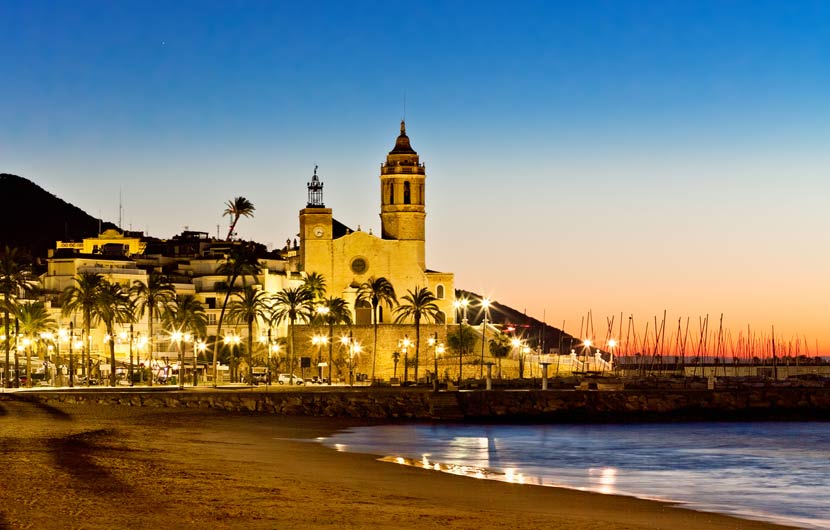
Sitges sits about 35 to 40 minutes from central Barcelona. The Rodalies R2 Sud train runs frequently to Barcelona Sants and Passeig de Gràcia in roughly that time, the C-32 motorway reaches the city in about 35 minutes by car, and Barcelona El Prat airport is around 20 to 30 minutes away, making the town a practical base for commuters and second-home owners.
The R2 Sud train to Barcelona
The Rodalies R2 Sud line links Sitges directly with central Barcelona, reaching Barcelona Sants and Passeig de Gràcia in about 35 to 40 minutes. Services run frequently throughout the day, which makes the train a reliable option for daily commuters who want to avoid driving and parking in the city.
Passeig de Gràcia places you in the centre of Barcelona’s business and shopping district, while Sants connects onward to regional, national and high-speed rail. For many residents, the station’s walkable position within Sitges is part of the town’s appeal.
By car on the C-32
The C-32 motorway connects Sitges to Barcelona in about 35 minutes under typical conditions. It is the main road link north into the metropolitan area and south along the coast, giving residents flexibility for journeys the train does not cover, from business meetings to weekend trips along the Costa Brava and beyond.
Barcelona El Prat airport
Barcelona El Prat airport is roughly 20 to 30 minutes from Sitges by car, closer than it is from much of Barcelona itself. That proximity is one of the practical reasons international buyers and second-home owners favour the town, with frequent connections across Europe within easy reach.
For owners who split their time between Sitges and another base, short airport transfers reduce the friction of regular travel and make a part-year residence genuinely workable.
Why connectivity supports Sitges values
Strong, dependable transport links underpin sustained demand in Sitges, where average asking prices sit at €5,987/m² and the Idealista index recorded €5,257/m² in May 2026, up 13.4% year on year. Access to Barcelona without living in it is a core part of what buyers pay for.
This blend of coastal living and city proximity suits two clear groups: commuters who need Barcelona within reach each day, and second-home owners who value quick airport access for regular international travel.
| Route | Mode | Typical time |
|---|---|---|
| Sitges to Barcelona (Sants / Passeig de Gràcia) | R2 Sud train | 35 to 40 min |
| Sitges to Barcelona | Car (C-32) | About 35 min |
| Sitges to El Prat airport | Car | 20 to 30 min |
Related guides
Sitges real estate · Living in Sitges · Cost of living · Market report.
Spotted an error or have a suggestion? Let us know here, we keep this guide up to date.
Frequently asked questions
How long is the train from Sitges to Barcelona?
The Rodalies R2 Sud train runs from Sitges to central Barcelona in about 35 to 40 minutes, stopping at Barcelona Sants and Passeig de Gràcia. Services are frequent throughout the day, so the train is a practical choice for daily commuters who would rather not drive into the city and deal with parking.
Is Sitges a realistic place to commute to Barcelona from?
Yes. With the R2 Sud train reaching central Barcelona in about 35 to 40 minutes and the C-32 motorway taking around 35 minutes by car, many residents commute daily. The frequency of train services and the directness of the road link make Sitges a workable base for people working in Barcelona who want coastal living.
How far is Sitges from Barcelona El Prat airport?
Barcelona El Prat airport is roughly 20 to 30 minutes from Sitges by car, which is closer than it is from much of Barcelona itself. That short transfer is one of the practical reasons international buyers and second-home owners favour the town, since it makes regular travel and part-year living considerably easier.
Does good transport access affect Sitges property values?
Connectivity is a key part of demand in Sitges, where average asking prices are €5,987/m² and the Idealista index showed €5,257/m² in May 2026, up 13.4% year on year. Easy access to Barcelona by train, road and air, without living in the city, is a core part of what buyers are paying for.