

Barleigh Ellis Research · 12 May 2026 · 14 min read
The full-year 2025 figures are now published and they leave little room for ambiguity. Spain recorded 705,357 residential property transactions last year, the highest number since 2007, while the national house-price index rose 12.7 per cent, the steepest annual increase in eighteen years. Catalonia, and Barcelona in particular, outpaced even those national benchmarks.
This report draws exclusively on verified data from INE (Instituto Nacional de Estadística), the Colegio de Registradores de la Propiedad, the Consejo General del Notariado, Idescat (the Catalan statistics authority), the Banco de España, and research divisions of BBVA, CaixaBank, and Bankinter.
Spain in 2025: A Record Year
According to the INE, the annual Housing Price Index (IPV) closed Q4 2025 at +12.9 per cent year-on-year, with second-hand property rising 13.1 per cent and new-build 11.2 per cent. The full-year average came in at +12.7 per cent, 4.3 points above 2024 and the strongest gain since the pre-crisis year of 2007.
Behind the headline numbers lies a structural reality. Spain faces an accumulated housing deficit of approximately 730,000 homes, according to CaixaBank Research. New household formation runs at roughly 180,000 per year, plus some 50,000 net purchases by non-residents. Construction permits in 2025 totalled approximately 132,000, and completed homes will struggle to exceed 100,000 units during 2026, constrained by labour shortages, regulatory complexity and infrastructure bottlenecks.
“The market is no longer accelerating: it is consolidating at altitude. The structural deficit ensures prices have a floor, even as growth moderates.
Catalonia: 112,000 Transactions and Counting
Catalonia recorded 112,105 property transactions in 2025 according to the Colegio de Registradores. The price of housing purchases grew 6.4 per cent across the region, reaching an average of €2,709 per square metre, though Barcelona city commands multiples of that figure. Provincial Barcelona alone saw a 19 per cent surge in transaction volumes in the first nine months of 2025, with 55,465 sales registered.
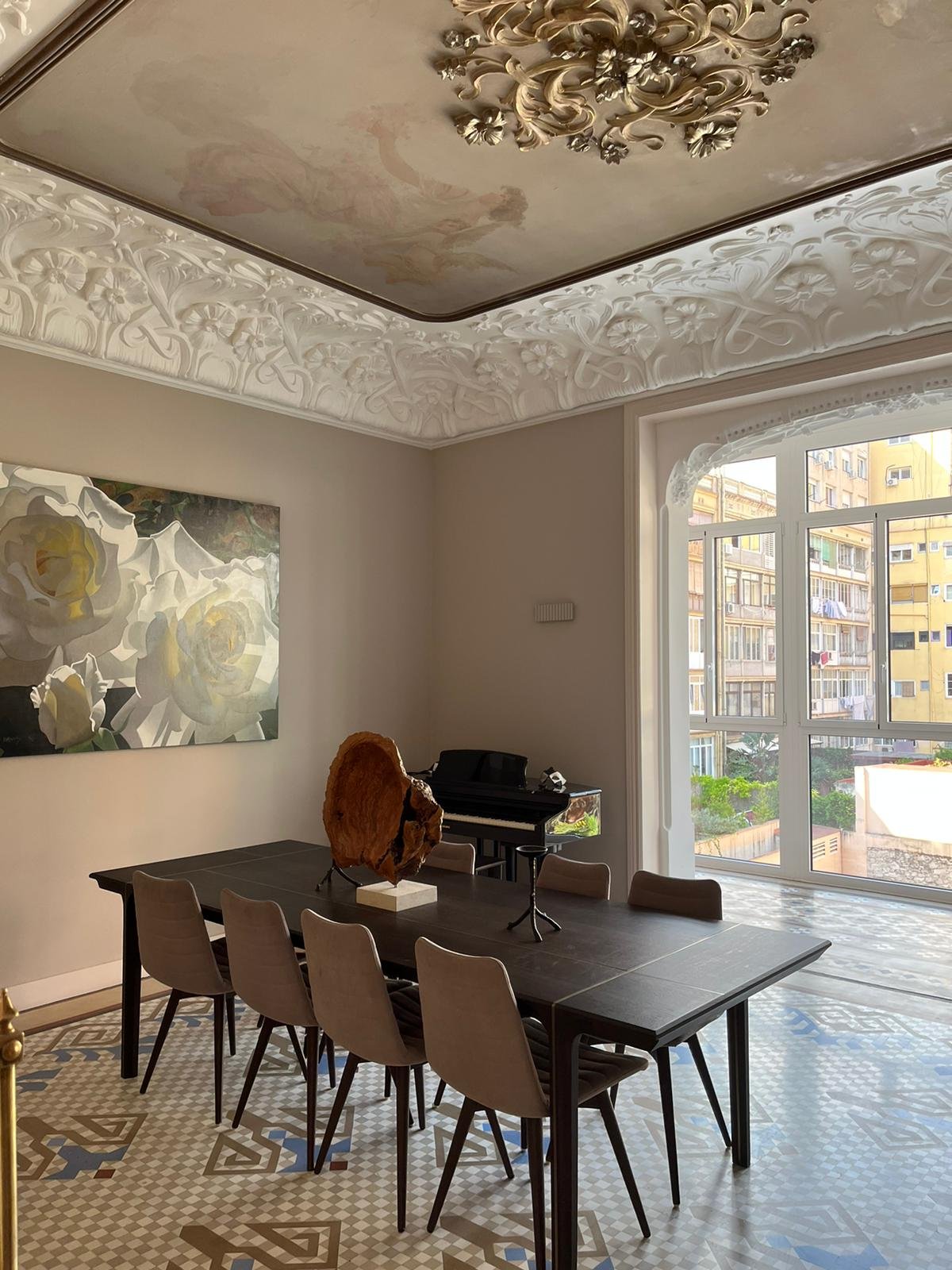
In Barcelona city, the Portal Estadístico del Notariado confirmed an average price of €4,587 per square metre, a historic record, with a 9.3 per cent increase in the period January to August 2025 versus 2024. Idealista data from early 2026 places the citywide average at €5,144/m².
The mortgage market tells a complementary story. In 2025, 86,135 new mortgages were constituted in Catalonia, with an average monthly payment of €845.80 according to Registradores data. The 12-month Euribor closed December 2025 at 2.267 per cent and has since stabilised around 2.2 to 2.7 per cent, a benign environment for leveraged purchases.
Foreign Buyers: A Structural Shift
Foreign purchases in Catalonia have grown from 6.6 per cent of the market in 2007 to 20.82 per cent in 2025, according to the Notariado. That is a tripling in relative terms over eighteen years. Nationally, the Registradores estimate approximately 97,500 foreign purchases in 2025, with the foreign share at 15.6 per cent in Catalonia.
The buyer profile is evolving. The abolition of Spain's Golden Visa programme on 3 April 2025 has reduced speculative, residency-driven demand: foreign home purchases linked to the programme fell approximately 44 per cent. But the broader trend is unaffected: lifestyle buyers from France, Germany, the Netherlands, Switzerland, the United Kingdom and the United States continue to drive activity. These are executives, entrepreneurs, digital nomads and high-net-worth families who purchase for genuine use, not for a visa.
In premium coastal towns like Sitges, Begur and Llafranc, international buyers now account for 60 to 70 per cent of transactions. Approximately 60 per cent of purchases above €600,000 are completed without mortgage financing, a cohort largely indifferent to interest-rate fluctuations.
“The post-Golden Visa buyer is purchasing for the right reasons: lifestyle, connectivity, architectural quality. That is a more stable foundation for the market.
Sitges & the Garraf Coast
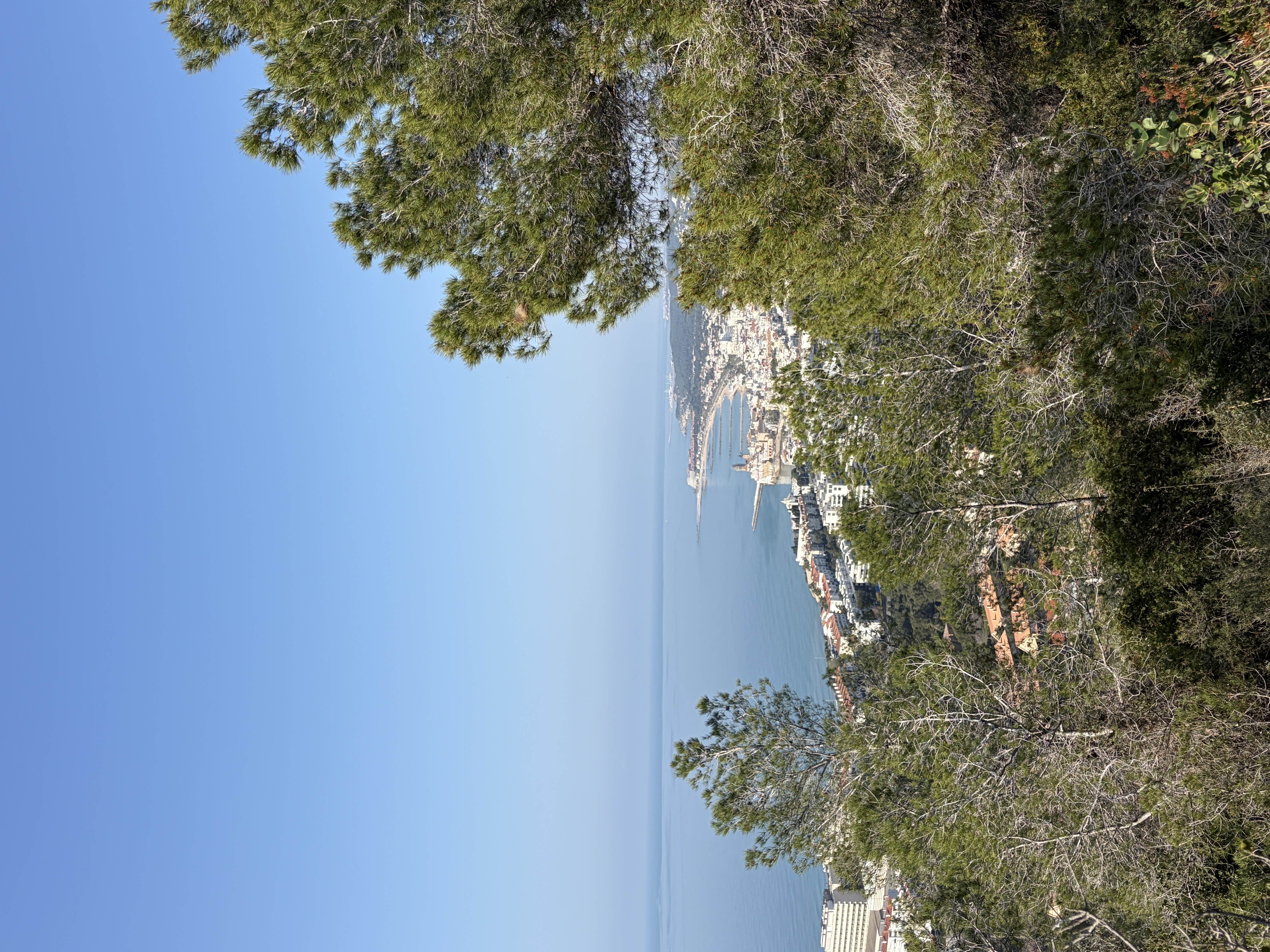
Sitges remains one of the most sought-after coastal markets in the Mediterranean. The Ministerio de Vivienda places the assessed value of free housing in Sitges at €4,335 per square metre, making it one of Spain's five most expensive coastal towns, alongside Santa Eulària del Ríu (Ibiza) and San Sebastián.
In practice, prices vary significantly by micro-location. The prime areas of Can Girona, Terramar and Vinyet command asking prices of €6,315/m² according to Engel & Völkers data from January 2026, while Llevantina-Montgavina-Garraf averages €4,051/m². The overall average property price in Sitges stood at approximately €1.3 million based on 63 listings analysed in early 2025.
The rental market reflects similar intensity. Average asking rents reached €19.57/m² per month in January 2026. Sitges continues to attract a predominantly international clientele: families relocating from northern Europe, creative professionals seeking Mediterranean light, and retirees drawn to the town's cosmopolitan character and proximity to Barcelona (35 minutes by car or train).
Girona & the Costa Brava
Girona city has seen prices rise steadily for almost four years, reaching €2,740 per square metre. But it is the Costa Brava's prime coastal towns that command international attention and premium prices.
In Begur, the epicentre of the Costa Brava market, housing prices range from €5,000 to €8,000/m², with premium villas boasting sea views exceeding €9,000/m². Forecasts project continued appreciation of 6 to 8 per cent annually for premium properties in Begur, Cadaqués, and Platja d'Aro. The market is characterised by extreme scarcity: strict building regulations, protected natural landscapes, and a finite supply of sea-view plots ensure that well-located properties face constant competitive pressure.
The Costa Brava Buyer
Who They Are
Executives, entrepreneurs and independent professionals in consulting, finance, medicine and technology. High-net-worth digital nomads who value environment, connectivity and privacy. Lifestyle investors seeking second homes with appreciation potential and seasonal use.
Where They Come From
Primarily France, Germany, the Netherlands, Switzerland, the United Kingdom and the United States. International buyers represent 60 to 70 per cent of activity in prime coves. The majority seek architectural quality, energy performance and sea views above all else.
A widening gap is emerging between iconic coastal locations and their lesser-known neighbours. A villa with sea views in Begur or Sa Riera commands a substantial premium over an equivalent property in a nearby but less established town, and that differential is expected to grow through 2026 as selectivity increases among buyers.
The Supply Equation
The structural supply shortage remains the single most important factor underpinning prices. Spain's accumulated housing deficit stands at approximately 730,000 homes according to the latest analysis, and almost half of that shortfall is concentrated in five provinces: Madrid, Barcelona, Valencia, Alicante, and Murcia.
BBVA Research projects new building permits will rise to around 160,000 annual units by 2026–2027, but even this more optimistic figure falls short of annual demand. Completed homes in 2026 are unlikely to exceed 100,000, constrained by labour shortages, supply-chain friction, and what CaixaBank describes as an increasingly complex regulatory burden. The gap between where homes are needed and where they are being built is growing, with provinces facing the highest shortages often seeing the least new construction.
For buyers in Barcelona, Sitges and the Costa Brava, the implication is clear: well-located property in desirable areas will remain scarce, and that scarcity supports prices even if broader economic conditions soften.
Financing: Stable Rates, Shifting Preferences
The 12-month Euribor, the benchmark for variable-rate mortgages in Spain, followed an uneven path in 2025, falling from 2.526 per cent in January to approximately 2.08 per cent in July, before rising through five consecutive monthly increases to close December at 2.267 per cent. As of spring 2026, it remains in the 2.2 to 2.7 per cent range, with market consensus expecting continued stability.
Spanish borrowers have responded to the rate environment with a clear preference: 57.75 per cent of new mortgages in the past twelve months were taken at fixed rates, according to mortgage comparison data. The average monthly mortgage payment in Catalonia stood at €845.80 in 2025.
The Banco de España's Informe de Estabilidad Financiera noted that, by late 2024, residential property prices were between 1.1 and 8.5 per cent above their estimated long-term equilibrium level. This is a modest overvaluation in historical context, and well below the extremes seen before the 2008 crisis. The improvement in financing conditions, while positive, is unlikely to significantly ease access to housing without parallel progress on supply.
Outlook: What to Expect Through 2026
Consensus among Spain's major research institutions points to continued price growth in 2026, albeit at a more moderate pace. Bankinter forecasts +7 per cent, S&P Global projects +9.3 per cent, and BBVA Research estimates +5.3 per cent nationally. In Barcelona and its premium satellite markets, our expectation is growth in the 4 to 7 per cent range, with prime coastal locations in the Costa Brava potentially outperforming.
Prices Consolidate at Altitude
Double-digit growth gives way to mid-single-digit appreciation. A healthy transition from sprint to endurance, and more sustainable for genuine buyers.
Supply Remains the Binding Constraint
With a 730,000-home deficit and completions running below 100,000 annually, well-located property will remain scarce. The gap between supply and demand is not closing.
Foreign Demand Evolves, Doesn’t Disappear
The Golden Visa’s end removed speculative demand but left lifestyle demand intact. Catalonia’s 20.8 per cent foreign buyer share is a structural feature, not a cyclical one.
Sitges and the Costa Brava: Selectivity Deepens
Buyers in the segment are more discerning than ever: demanding sea views, architectural quality and energy performance. The premium for iconic locations over secondary ones will widen.
Financing Window Stays Open
Euribor stability around 2.2–2.7 per cent and competitive fixed-rate offerings create reasonable conditions for leveraged purchases. Non-resident terms remain accessible at 60–70 per cent LTV.
Regulation: Navigate with Care
Catalonia’s rental price caps, Barcelona’s tourist apartment phase-out (10,101 licences to be eliminated by November 2028), and energy-efficiency requirements demand professional guidance.
The principal risks include broader macroeconomic uncertainty, potential ECB policy shifts, and the cumulative effect of regulatory measures on investor sentiment. A modest correction of 5 to 10 per cent in the most overheated micro-markets remains possible. However, the fundamental equation of strong demand, structural supply shortage, and enduring international appeal supports continued growth in Catalonia's most desirable locations.
“For buyers considering Barcelona, Sitges, or the Costa Brava in 2026, the question is not whether the market will correct; it is whether you can find the right property before someone else does.
Sources & References
- INE (Instituto Nacional de Estadística): Índice de Precios de Vivienda, Q4 2025 · ine.es/dyngs/Prensa/IPV4T25.htm
- Colegio de Registradores de la Propiedad: Estadística Registral Inmobiliaria, Q4 2025 · registradores.org
- Consejo General del Notariado: Portal Estadístico del Notariado · penotariado.com
- Idescat: Estadística de la compraventa y el precio de venta de la vivienda usada · idescat.cat
- Banco de España: Informe de Estabilidad Financiera, Otoño 2025 · bde.es
- Banco de España: Indicadores del Mercado Inmobiliario, 1.5 · bde.es/webbe/es/estadisticas
- CaixaBank Research: Housing Market Analysis & Supply Deficit Reports, 2025–2026 · caixabankresearch.com
- BBVA Research: Spain Real Estate Watch, November 2025 · bbvaresearch.com
- Bankinter: Previsión precio vivienda España 2026–2027 · bankinter.com
- Ministerio de Vivienda y Agenda Urbana: Estadísticas de precio de vivienda libre · mivau.gob.es
- Idealista: Barcelona Property Prices & Sala de Prensa · idealista.com
- Engel & Völkers: Sitges Property Prices & Market Data 2026 · engelvoelkers.com
- Ley Orgánica 1/2025: BOE, 3 January 2025 (abolición Golden Visa)

Ronei Kolesny
Licensed
Founder of BARLEIGH ELLIS, specialising in real estate across Sitges, Barcelona, Girona and the Costa Brava.
Ready to explore the market?
Our team provides confidential, data-driven guidance for international buyers across Barcelona, Sitges, Girona and the Costa Brava.
Arrange a Consultation