
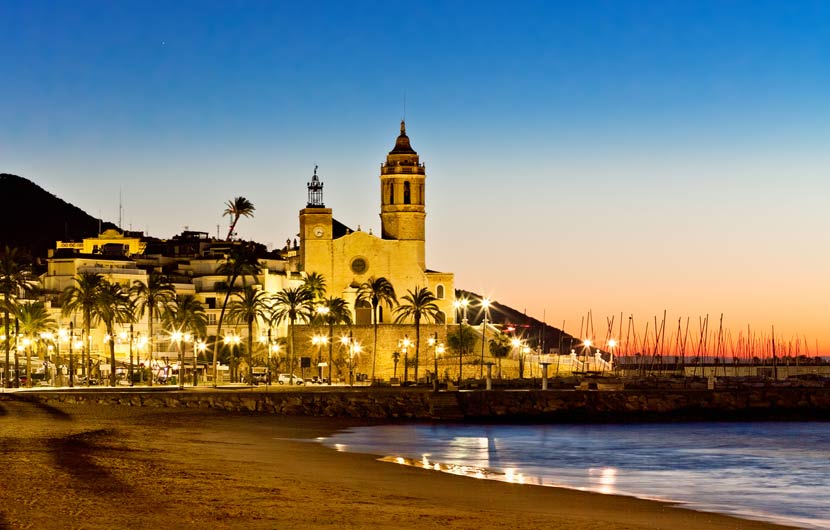
The soul of Sitges is not on its beaches but in its old town — the Casc Antic, a whitewashed labyrinth gathered on the small headland of La Punta around the church of Sant Bartomeu i Santa Tecla. These are streets to be walked slowly: lanterns and geraniums, shuttered façades, the occasional glimpse of blue between the walls. Here are six of the most beautiful, and what makes each one worth seeking out.
At a glance
| Street | Known for | Where it sits |
|---|---|---|
| Carrer de la Davallada | A cobbled descent through the old town | Casc Antic, toward the church |
| Carrer d’en Bosc | A cobbled stone lane with gothic doorways | Heart of the Casc Antic |
| Carrer del Port Alegre | A palm-shaded square in the fishermen’s quarter | Beside Sant Sebastià beach |
| Carrer Major | The historic spine of the old town | Between Cap de la Vila and the church |
| Carrer de la Carreta | A slender, postcard-pretty white lane | Casc Antic |
| Carrer de Pau Barrabeig | A quiet stepped lane | Casc Antic, near the church |
Carrer de la Davallada
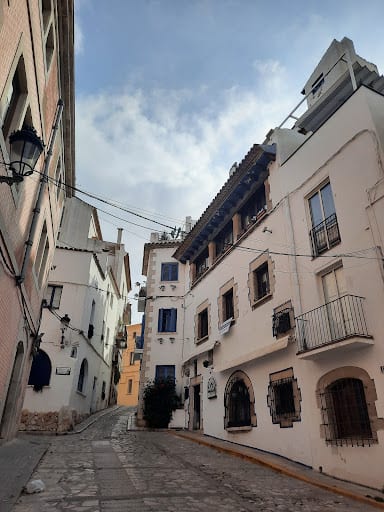
The Davallada — literally “the descent” — is one of the old town’s most evocative corners. Cream and whitewashed townhouses with iron balconies and terracotta eaves crowd a cobbled lane that drops and turns through the Casc Antic; an old pointed-arch doorway anchors one corner, a wrought-iron lantern another, and a flight of whitewashed steps climbs away behind. This is the unhurried, lived-in Sitges that rewards anyone who wanders a few streets back from the seafront.
Carrer d’en Bosc
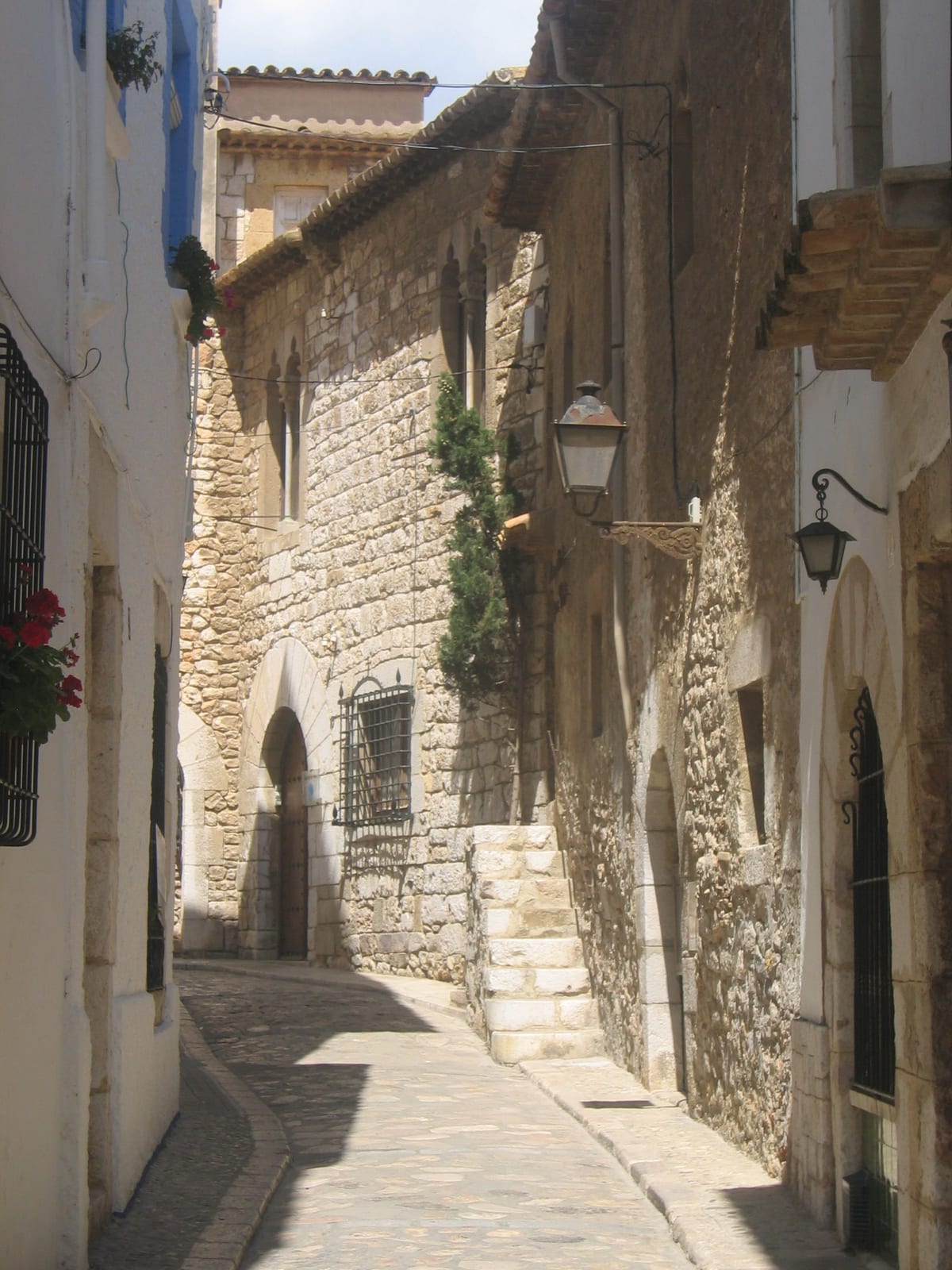
A few steps away, Carrer d’en Bosc threads through the very core of the Casc Antic — but here the whitewash gives way to bare, honey-coloured stone. A cobbled lane curves past medieval façades, a pointed gothic doorway and grilled windows, iron lanterns and a spill of geraniums softening the stonework. It is one of the oldest-feeling corners of Sitges: the kind of quiet, lived-in street that residents love and most visitors walk straight past.
Carrer del Port Alegre
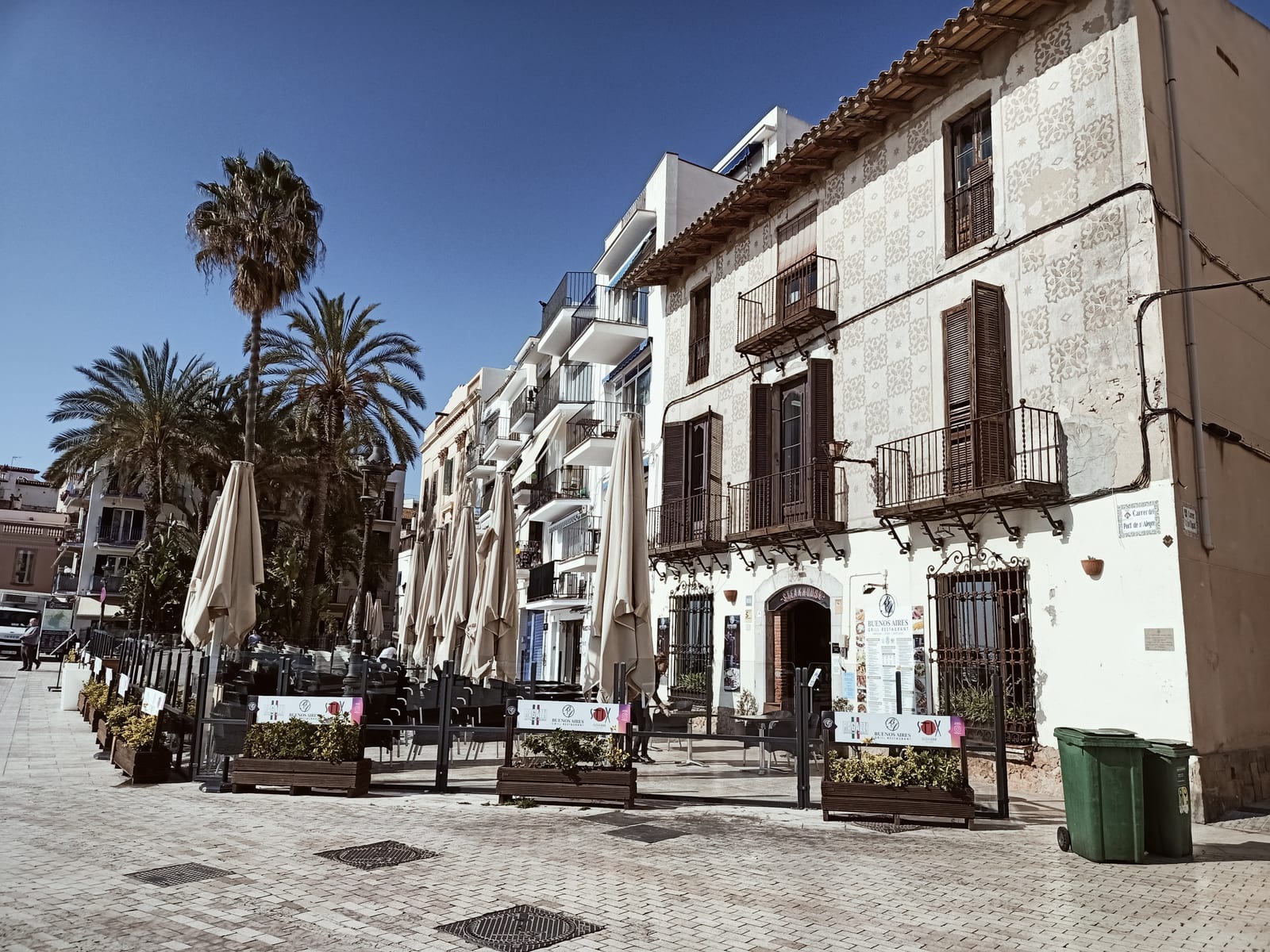
On the seaward side of the church, the Port Alegre — the “happy port” — runs through the old fishermen’s quarter beside Sant Sebastià beach. Here the street opens into a palm-shaded, paved stretch of café terraces and handsome townhouses, one of them clad in the decorative ceramic tilework that distinguishes several of the old town’s seafront houses. It is gentler and more local than the busier Ribera promenade on the far side of La Punta, and one of the most coveted addresses in the old town.
Carrer Major
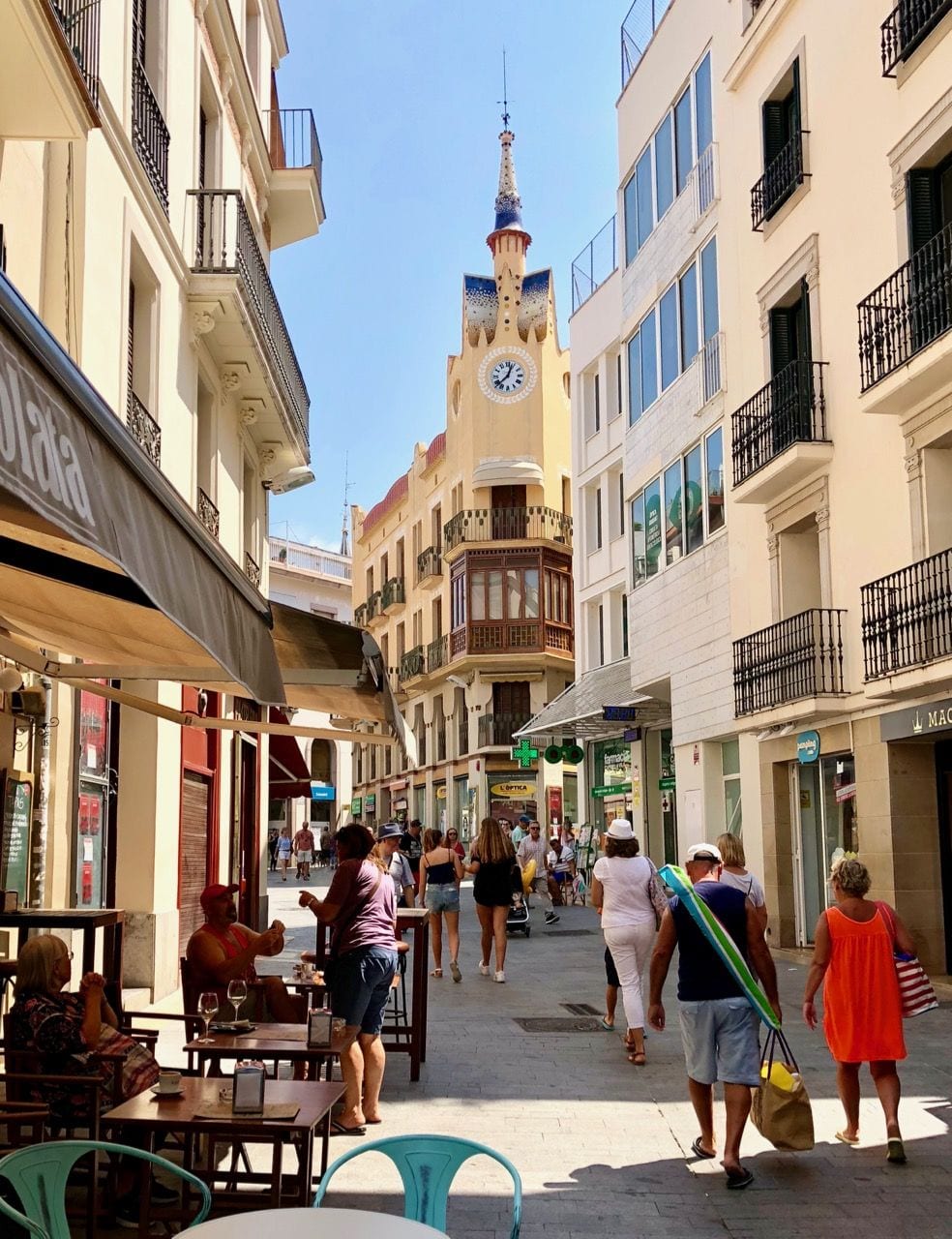
Carrer Major — the “Main Street” — is the historic commercial spine of the old town, running between Cap de la Vila, with its landmark Modernista clock tower, and the church above. It mixes handsome period façades, independent shops and café terraces, and the easy rhythm of town life. Walk it slowly and you read the whole social history of Sitges in its doorways, balconies and shopfronts.
Carrer de la Carreta
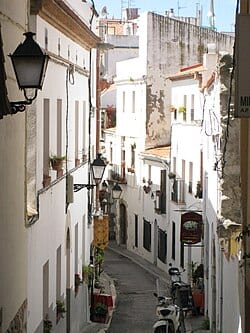
Carrer de la Carreta is the postcard the guidebooks reach for: a slender, immaculately white lane where the houses almost lean together overhead and every doorway seems dressed with plants. Quiet, residential and beautifully kept, it is the kind of street that makes buyers fall for the old town in a single afternoon.
Carrer de Pau Barrabeig
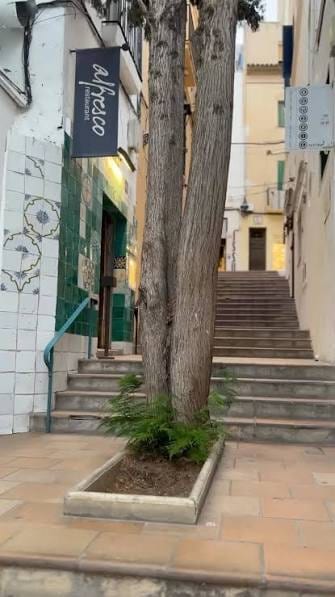
Carrer de Pau Barrabeig is one of those quiet corners that reward the wanderer. A flight of pale stone steps climbs between whitewashed walls, a single tree rises from a tiled planter set into the paving, and a green-tiled shopfront adds a flash of colour. There is no headline sight here, which is exactly the point: this is the old town at its most intimate, lived-in and unstaged.
Living on these streets
For all their beauty, these lanes are also one of the scarcest property markets on the coast. The old town holds some of the most characterful homes in Sitges — Modernista townhouses, former fishermen’s cottages and restored period houses — but they rarely reach the portals, many carry heritage protection, and prices reflect the rarity. If a home on a street like these is what you are after, it pays to be known to the people who hear of them first. That is our work: as your buyer’s agent we find, vet and negotiate the homes that change hands quietly. Start with living in Sitges or the best neighbourhoods in Sitges.
Spotted an error or have a suggestion? Let us know here, we keep this guide up to date.
Frequently asked questions
What is the most beautiful street in Sitges?
Many locals point to Carrer de la Davallada — “the descent” — a stepped, whitewashed lane hung with iron lanterns that drops toward the church and the sea, and the most photographed street in town. But the whole Casc Antic (old town) around the church of Sant Bartomeu rewards slow wandering: Carrer Major, Carrer d’en Bosc, Port Alegre, Carrer de la Carreta and Carrer de Pau Barrabeig are all worth seeking out.
Where is the old town in Sitges?
The Casc Antic sits on La Punta, the small headland crowned by the church of Sant Bartomeu i Santa Tecla, between the Passeig de la Ribera seafront and Sant Sebastià beach. Its streets are largely pedestrian and best explored on foot.
Can you buy property on these old-town streets?
Yes — the old town holds some of the most characterful homes in Sitges: Modernista townhouses, former fishermen’s cottages and restored period houses. Stock is scarce and tightly held, many homes carry heritage protection, and prices reflect the rarity. As your buyer’s agent we can find and vet what rarely reaches the portals.
Are the streets of the Sitges old town pedestrian?
Most of the Casc Antic is pedestrian or heavily restricted to traffic, which is part of its calm and charm. Residents’ parking is limited; most owners use garages or off-street parking in the adjoining neighbourhoods.
When is the best time to walk the old town?
Early morning or out of high season for the quiet, photogenic light. For spectacle, time it with Corpus Christi and its flower-carpets (the Catifes de Flors) or the Festa Major in late August, when the old town is at its most dressed and alive.